

Busan has a way of feeling big and breezy at the same time—like a proper port city that still makes room for slow mornings, market lunches, and sunset walks that don’t cost a thing. If it’s your first visit, the trick isn’t trying to “see everything,” but building a few solid days around the neighborhoods that make Busan feel unmistakably Busan.
This guide is written for international travelers staying in a guesthouse: people who like a good subway map, appreciate a cheap bowl of noodles at 11 p.m., and want practical tips that actually help on the ground. Expect sea views, street food, low-effort hikes, and a couple of places you’ll remember long after you’ve left.
Key Takeaways
- Pick one coastal area per day (Haeundae/Seomyeon/Gwangalli) so you’re not bouncing across town.
- Use the Busan Metro + walking—taxis are handy late at night, but most sights connect easily by subway.
- Go early for markets and viewpoints; go late for beaches and night scenery.
- Carry a small towel and a reusable water bottle—guesthouse life is easier with both.
- Learn two phrases: “Igeo juseyo” (this one, please) and “Maewoyo an dwaeyo” (no spicy, please).
Busan, First Time Done Right: A Relaxed, Local-Feeling Guide for Guesthouse Travelers
1) Jagalchi Market & Nampo-dong: Seafood, Side Streets, and the City’s Classic Energy
If you want a first-day snapshot of Busan’s personality, start in Nampo-dong. It’s busy without being glossy, and it’s packed with the kind of everyday city life travelers come to Korea for: markets, alleys, snack stalls, and small shops that reward wandering.
Why it’s worth it: Jagalchi is iconic for a reason. Even if you don’t sit down for a full seafood meal, walking through the stalls is pure Busan—loud, salty air, and a fascinating look at what people actually eat on the coast.
- Practical tips:
- Go in the morning or late morning for the liveliest market atmosphere and better photos (cleaner light, fewer crowds).
- If you want to eat seafood, look for places where prices are clearly posted. Pointing works; so does taking a photo of the menu.
- Pair it with Gukje Market and BIFF Square nearby for street snacks and low-key shopping.
- Guesthouse-friendly move: grab a few market snacks (hotteok, kimbap, fruit) and take them to a nearby park or the waterfront.
2) Gamcheon Culture Village: Hillside Views Without a Big Hike
Gamcheon is colorful, yes—but the real draw is the layout: staircases, tiny lookout points, and homes stacked into the hillside like a living collage. It can be touristy, but it’s still a genuinely interesting slice of Busan’s geography and history.
Why it’s worth it: You get a wide view of the city and sea, plus the simple fun of exploring narrow lanes where every turn looks different.
- Practical tips:
- Wear shoes with grip. The stairs can be steep and slippery after rain.
- Go early to avoid photo lines at the popular viewpoints.
- Be respectful—people live here. Keep voices down near homes and avoid blocking doorways for photos.
- Bring cash for small cafés or a simple drink break with a view.
3) Haeundae Beach & Dalmaji Hill: Sea Air, Coffee Stops, and a Classic Evening Walk
Haeundae is Busan’s most famous beach area, and on a first trip it’s worth seeing at least once—especially if you’re staying in a guesthouse nearby and want an easy, safe neighborhood to roam at night.
Why it’s worth it: The beach is wide, the walking paths are easy, and the area is built for strolling: convenience stores, casual restaurants, cafés, and sea breezes that make even a simple evening feel like a holiday.
- Practical tips:
- Sunset is prime time. Grab a drink from a convenience store, then walk the promenade as the lights come on.
- For a calmer vibe, head toward Dalmaji Hill for viewpoints and cafés—especially nice in the morning.
- Pack a light layer: ocean wind can be cooler than the city streets, even in mild weather.
- Guesthouse-friendly move: do laundry earlier in the day, then reward yourself with a long beach walk and a late simple dinner.
4) Haedong Yonggungsa Temple: A Seaside Temple That Feels Like a Real Detour
Most temples in Korea sit in mountains or forests; Yonggungsa is different. It’s perched by the sea, with waves crashing below and a path that winds past shrines and stone lanterns toward the water.
Why it’s worth it: It’s one of those places that doesn’t feel like “another checklist stop.” The setting does the work—salt air, ocean sound, and a view that makes you slow down.
- Practical tips:
- Go early for fewer crowds and better photos—midday can feel busy.
- Dress for stairs and coastal wind. Comfortable shoes matter here.
- If you’re on a tight budget, pack a small snack and water—nearby options can be pricier because it’s a major sight.
- Combine with Haeundae if you want a full “east coast day.”
5) Gwangalli Beach at Night: Bridge Views, Cheap Eats, and an Easy Social Scene
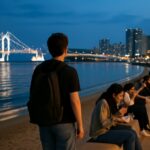
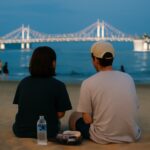
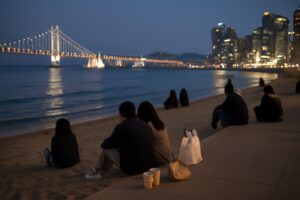
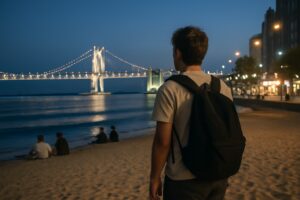
Gwangalli is where Busan leans into nighttime atmosphere. The beach is smaller than Haeundae, but the view is the star: Gwangan Bridge lit up across the water, reflected in the waves.
Why it’s worth it: Even if you’re watching your spending, this area delivers. Night walks are free, the energy is lively, and it’s a great spot to meet other travelers if you’re staying in a guesthouse.
- Practical tips:
- Eat simply: look for casual Korean diners (rice sets, noodles) a couple streets back from the beach for better value.
- If you want a rooftop drink, go early for seating—or just grab a takeaway coffee and sit on the sand.
- Bring a small picnic mat or sit on a jacket. Guesthouse travelers: this is the easiest “budget luxury” evening.
- Last trains end earlier than you might expect—check subway times if you’re staying far away.
6) Seomyeon: The Practical Hub for Food, Metro Connections, and Everyday Busan
Seomyeon isn’t a postcard neighborhood, but it’s a traveler’s secret weapon—especially if you’re staying in a guesthouse and want easy transport. This is where you come to eat well, move quickly, and feel the city’s everyday rhythm.
Why it’s worth it: You can bounce to most parts of Busan efficiently from here, and you’ll find plenty of affordable meals without needing a “famous” restaurant.
- Practical tips:
- Use Seomyeon as your “reset” zone: a simple dinner, grocery run, and maybe a café to plan the next day.
- Look for basement food streets and small local spots—often cheaper and faster than main-road restaurants.
- Guesthouse-friendly move: stock up on breakfast items (bananas, yogurt, kimbap) so mornings are easy and you can leave early for day trips.
7) Igidae Coastal Walk (or a Simple Urban Hike): A Low-Cost Way to See the City Differently
If you need a break from markets and café hopping, do a coastal walk. Busan’s best moments often happen on foot—when you’re above the water, the city drops behind you, and the sea takes over the soundtrack.
Why it’s worth it: It’s scenic without being expensive, and it’s the kind of place that makes you feel like you’ve escaped the crowd—even though you’re still in the city.
- Practical tips:
- Bring water and something small to eat. Options along walking trails can be limited.
- Go in late afternoon for softer light and cooler temperatures.
- Wear comfortable shoes; some sections have uneven ground.
- If the weather turns, swap to an easier city stroll and café stop—Busan is great at last-minute plan changes.
8) Guesthouse Survival Notes: Small Habits That Make Busan Easier
Guesthouses are a great match for Busan—social, budget-friendly, and usually in neighborhoods with good transport. A few small habits will make your stay smoother and keep things friendly with roommates.
- Practical tips:
- Keep a small “go bag” by the door: T-money card, water, power bank, light layer, and a compact umbrella.
- Quiet hours matter. If you’re coming back late from Gwangalli, prep pajamas and toiletries earlier.
- Use convenience stores wisely: they’re perfect for quick breakfasts, late snacks, and affordable drinks.
- If you’re traveling solo, join one shared activity (a group meal, a walk, a day trip). Busan is an easy city to make travel friends in.


No comment yet, add your voice below!