

Busan is the kind of city that wins you over in small moments: the first salty gust on a coastal walk, the sizzle of street food outside a market, the quiet of a temple perched above the waves. It’s South Korea’s port city, but it doesn’t feel like a single “big city” experience—more like several neighborhoods stitched together by mountains, metro lines, and the sea.
If you’re staying in a guesthouse, you’re in a great position to explore like a local: quick breakfasts, shared tips from other travelers, and the freedom to build your days around light plans and strong cravings (usually for seafood). This guide focuses on first-time-friendly stops that are easy to reach, worth your time, and practical for a short stay.
Key Takeaways
- Use Busan’s metro + walking for most sights; keep a refillable transit card (T-money/Cashbee) topped up.
- Start early for coastal spots and markets—quieter streets, better photos, and shorter lines.
- Bring a light jacket even in warmer months; sea breezes can surprise you, especially at night.
- Plan one “sea day,” one “market day,” and one “views day” to avoid crisscrossing the city.
- Cash helps in older markets, but most places accept cards; carry both.
1. Haedong Yonggungsa Temple (The Sea-Edge Temple)
Most temples in Korea sit quietly in the mountains. Haedong Yonggungsa is different—dramatically set on the rocky shoreline with staircases that lead you down toward the water. Even if you’ve visited temples elsewhere in Korea, this one feels uniquely Busan: sea air, gull calls, and a coastline that turns simple sightseeing into an experience.
Why it’s worth visiting: The ocean backdrop makes it one of the most memorable photo spots in the region, and it’s a peaceful reset from the city. Come on a clear day and you’ll understand why people make the trip.
- Best time: Morning for softer light and fewer tour groups. Sunset is gorgeous but can be crowded.
- Practical tip: Wear shoes with grip—there are plenty of steps, and sea mist can make stone surfaces slippery.
- Getting there: Pair it with nearby coastal sights (like Haeundae) to make the travel time feel efficient.
2. Haeundae Beach + Dalmaji-gil (An Easy Sea Day)
Haeundae is Busan’s most famous beach, and for first-timers it’s a simple win: wide sand, a long promenade, and lots of cafés for breaks when the weather shifts. Even outside peak summer, it’s a great place to walk, people-watch, and get your bearings on how Busan moves.
Why it’s worth visiting: You get the classic “Busan by the sea” feeling with minimal planning. Add Dalmaji-gil (the hill road nearby) for a gentler, greener walk with sea views and coffee stops.
- Guesthouse-friendly tip: Pack a small towel and flip-flops if you’re the type to dip your feet in—many guesthouses have laundry options for quick-drying items.
- Budget tip: Convenience stores near the beach are perfect for an affordable picnic: gimbap, drinks, and fruit.
- Photo tip: Early morning gives you a clean shoreline and calmer water—better for natural, documentary-style shots.
3. Igidae Coastal Walk (Cliffs, Pines, and Low-Stress Views)
If you want ocean views without the crowds, Igidae is a solid choice. The coastal trail runs along cliffs and pine trees, with lookout points that feel like you’ve stepped out of the city—until you notice the skyline in the distance.
Why it’s worth visiting: It’s one of the best “I can’t believe this is still Busan” experiences: salty air, coastal rock formations, and views that keep changing as you walk.
- Practical tip: Bring water and a light snack; options are limited once you’re on the trail.
- Time planning: Aim for 1.5–3 hours depending on your pace and how often you stop for photos.
- Safety tip: Stick to marked paths near cliffs, especially after rain.
4. Jagalchi Fish Market + BIFF Square (Eat Like You Mean It)
Busan is a seafood city, and Jagalchi is where that reputation comes alive: tanks of live seafood, fast-moving vendors, and the unmistakable smell of the ocean. Nearby BIFF Square adds street food energy—hotteok with seeds, skewers, and snacks that make wandering easy.
Why it’s worth visiting: It’s not just about eating; it’s a crash course in Busan’s food culture. Even if you don’t love seafood, the atmosphere alone is worth the stop, and the street snacks nearby are universally friendly.
- How to order confidently: Walk a lap first, check posted prices, then choose a stall that feels welcoming. Pointing is normal.
- Budget tip: Share a few items with guesthouse friends—more variety, less cost, and you’ll try things you wouldn’t order solo.
- Timing tip: Go earlier in the day for the best selection; evenings get busier and louder.
5. Gamcheon Culture Village (Colorful Streets with a Real Neighborhood Feel)
Gamcheon’s stacked houses and winding alleys look like a postcard, but it’s also a lived-in neighborhood. The key is to treat it like someone’s home: keep voices down, don’t block doorways, and step aside when locals are moving through narrow lanes.
Why it’s worth visiting: The views over the rooftops are lovely, and the maze-like streets make for a relaxed wander—especially if you enjoy slow travel and photography.
- Practical tip: Wear comfortable shoes; there are steep slopes and plenty of stairs.
- Respect tip: Watch for signs asking for quiet or no photos in certain areas.
- Photo tip: Late afternoon light adds warmth to the painted walls without the harsh midday glare.
6. Seomyeon (Night Markets, Cheap Eats, and the “Local” Busan Energy)
Seomyeon is where you go when you want the city to feel busy—in a good way. It’s full of restaurants, late-night snacks, shops, and the kind of streets where you can roam without a plan and still end up eating well.
Why it’s worth visiting: For guesthouse travelers, it’s one of the easiest areas to meet people, find affordable meals, and end the day with something warm and comforting—like a bowl of noodles or Korean barbecue shared at a small table.
- Practical tip: Save a pin of your guesthouse on your phone map; alleys can look similar at night.
- Food tip: Look for busy spots with short menus—often a sign the place does a few dishes really well.
- Budget tip: Many casual restaurants offer filling set meals that are perfect if you’ve walked all day.
7. Gwangalli Beach at Night (Bridge Lights and an Easy Evening)
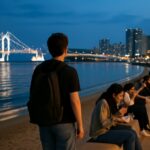
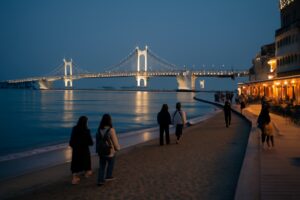
If you want a simple, low-effort Busan evening, go to Gwangalli after dinner. The beach is smaller and more relaxed than Haeundae, and the lit-up Gwangan Bridge gives the whole area a calm, cinematic feel—without needing any special event or ticket.
Why it’s worth visiting: It’s one of the easiest “wow” moments in the city. Grab a drink, sit on the sand, and let your legs recover while you still feel like you’re doing something special.
- Practical tip: Bring a light layer—wind off the water can be chilly even when the day felt warm.
- Photo tip: Use a steady surface or small travel tripod if you have one; night shots look best when stable.
- Guesthouse tip: If you’re traveling solo, this is a comfortable place to spend an evening without feeling awkward—lots of people are just strolling or sitting quietly.




No comment yet, add your voice below!