

Busan for First-Time Visitors: Coastal Markets, Café Alleys, and Easy Day Trips From a Guesthouse
Busan is the kind of city that makes you feel like you’re on a proper trip—even if your plan is just “walk, snack, repeat.” One minute you’re riding a metro under the city, the next you’re standing on a seaside path with fishing boats bobbing below and mountains behind you.
For first-timers staying in a guesthouse, Busan is especially easy: neighborhoods are well-connected, meals can be as cheap or as celebratory as you want, and the best days are often built from small moments—market breakfasts, café breaks, sunset viewpoints, and a long soak at a jjimjilbang.
Key Takeaways
- Pick one “east coast” day (Haeundae/Haedong Yonggungsa) and one “downtown” day (Jagalchi/BIFF/Gamcheon) to avoid backtracking.
- Start early at markets for calmer lanes and better photos; go back at night for the energy.
- Use your guesthouse smartly: ask staff which bus stop to use (often faster than the metro for coastal spots).
- Carry a small towel and change of socks if you’re doing a sauna/spa stop.
- Keep cash on hand for street food, market stalls, and older seafood shops.
1) Jagalchi Market + Nampo-dong: The Classic Busan Morning
If Busan has a “wake up and taste the city” neighborhood, it’s Nampo. Jagalchi Market is loud, salty, and real—in the best way—while nearby streets in BIFF Square and Gukje Market are packed with quick bites and bargain shopping.
Why it’s worth it: You’ll understand Busan’s port-city identity in one morning, and you can eat exceptionally well without planning anything complicated.
- Practical tips:
- Go early (around 9–10am) for a calmer market walk and cleaner photo light.
- Eat upstairs in the market buildings if you want a sit-down seafood meal; stalls can prepare what you choose.
- Try easy starters if you’re unsure: grilled fish set meals, fishcake (eomuk), and hotteok (sweet filled pancake) around BIFF.
- Mind the floor—it can be wet and slippery. Shoes with grip help.
Guesthouse-friendly add-on: Take your snacks back and do a “balcony lunch” if your guesthouse has a common area—market food feels extra good when you don’t have to rush.
2) Gamcheon Culture Village: Hillside Views Without the Hike Stress
Gamcheon’s stacked houses and bright lanes are famous for a reason, but the best version of it is unhurried: a slow loop, a few viewpoints, a coffee stop, and plenty of time to get pleasantly lost.
Why it’s worth it: It’s one of the easiest places in Busan to get a sense of how the city drapes itself over hills—plus you’ll leave with great photos even on a short visit.
- Practical tips:
- Arrive before midday to avoid crowd bottlenecks in narrow alleys.
- Wear shoes you trust—there are stairs, slopes, and uneven pavement.
- Be respectful with photos: people live here, so avoid peeking into windows or blocking doorways.
- Bring a small drink (or buy one there); it’s warmer than it looks on sunny days.
Budget note: You can enjoy Gamcheon without paid attractions. Spend on one café with a terrace view and call it a win.
3) Haeundae Beach + Dalmaji-gil: Busan’s Polished Seaside, Done Slowly
Haeundae can feel like “big city beach” at first glance—tall buildings, wide sand, lots going on. The secret is to pair it with Dalmaji-gil (the nearby hillside road) for a quieter, greener walk with cafés tucked among pines.
Why it’s worth it: You get both versions of Busan in one area: energetic waterfront and calm, scenic strolling.
- Practical tips:
- Sunrise is underrated here—less crowded, softer light, and a peaceful start if your guesthouse mates are still asleep.
- Dalmaji-gil is best on weekdays if you want a calmer walk and easier café seating.
- Pack layers: sea wind can flip the temperature quickly, especially near dusk.
- Convenience stores are your friend for a cheap beach picnic (kimbap + fruit + water).
Guesthouse-friendly move: If your guesthouse has laundry, do a quick wash before your beach day—sand and sea air will cling to everything.
4) Haedong Yonggungsa Temple: A Coastal Temple That Feels Like a Day Trip
Most temples are mountain escapes. Haedong Yonggungsa is different: it sits right above the sea, where waves and temple bells share the same soundtrack. Even if you’ve seen temples elsewhere in Korea, this one hits differently because of the coastline.
Why it’s worth it: It’s one of Busan’s most memorable “only here” sights, especially for first-time visitors who want a break from shopping streets and city blocks.
- Practical tips:
- Go early to enjoy the ocean views before tour crowds arrive.
- Take the bus if it’s direct from your neighborhood—ask your guesthouse host which route is simplest.
- Watch your step on temple stairs, especially if it’s recently rained.
- Keep voices low and dress comfortably but respectfully (nothing extreme needed; just be mindful).
Pair it with: A simple seafood lunch nearby or a café stop back toward Haeundae—make it a half-day, not a sprint.
5) Gwangalli Beach at Night: Bridge Lights, Easy Bars, No Big Plan Needed
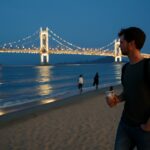
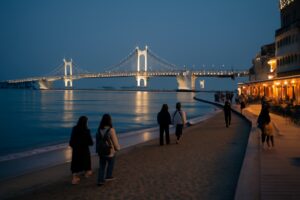
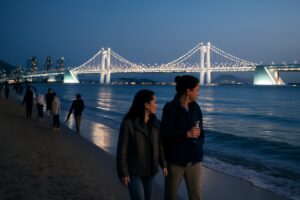
Gwangalli is where Busan’s night mood comes together without trying too hard. The Gwangan Bridge lights up, the beachfront fills with people chatting and snacking, and it’s easy to settle into an evening that feels social even if you’re traveling solo.
Why it’s worth it: It’s the simplest “wow, I’m really here” night scene—especially after a long day exploring.
- Practical tips:
- Eat earlier if you dislike queues—popular restaurants around dinner time can get busy.
- Grab a takeaway drink and walk the promenade; the best views are free.
- Choose a café with a second-floor window for bridge photos without crowds in your frame.
- Last trains matter: if your guesthouse is far, check metro times before you settle in.
Guesthouse tip: This is a great night to join a casual group from your guesthouse—Gwangalli is easy, central, and feels comfortable for mixed travel styles.
6) Spa Land (Centum City): The Reset Button After Walking All Day
Busan is a city of steps—markets, hills, coastal paths. A sauna/steam room session isn’t just relaxing; it’s practical travel maintenance. Spa Land in Centum City is clean, beginner-friendly, and easy to combine with shopping or a rainy afternoon.
Why it’s worth it: You’ll sleep better, your legs will thank you, and it’s a genuine slice of Korean everyday culture—without needing to be an expert.
- Practical tips:
- Bring basics: a hair tie, a small pouch for toiletries, and clean socks for afterward.
- Plan 2–4 hours so you’re not watching the clock.
- Hydrate—hot rooms sneak up on you.
- Know the vibe: the bathing areas are separated by gender; the common lounging areas are shared.
Budget hack: Eat a simple meal before you go; it’s easy to snack inside and accidentally turn “quick visit” into a pricey one.
7) Taejongdae: Sea Cliffs and Windy Views When You Need Nature
If you want the “edge of the city” feeling—pines, cliffs, and wide ocean—Taejongdae delivers. It’s the kind of place where you can walk quietly for an hour, take a few strong photos, and feel like you’ve left urban Korea behind.
Why it’s worth it: It’s one of the most satisfying nature breaks you can do without renting a car.
- Practical tips:
- Go on a clear day; views are the whole point, and fog can hide the coastline.
- Pack a wind layer even in warmer months.
- Start mid-morning so you’re not rushing back before dinner.
- Bring a small snack—it’s a nice spot for a quick break between viewpoints.
Guesthouse logistics: Ask your host whether bus or metro+bus is fastest from your neighborhood; Taejongdae access can vary depending on where you’re based.
If you plan your days around neighborhoods (not “top 20 attractions”), Busan becomes wonderfully simple. Choose one market morning, one coastal temple or cliff day, and one beach night—and leave room for the small guesthouse moments in between: shared breakfast tables, tips from other travelers, and the happy surprise of finding your favorite street in a city you met only yesterday.



No comment yet, add your voice below!